
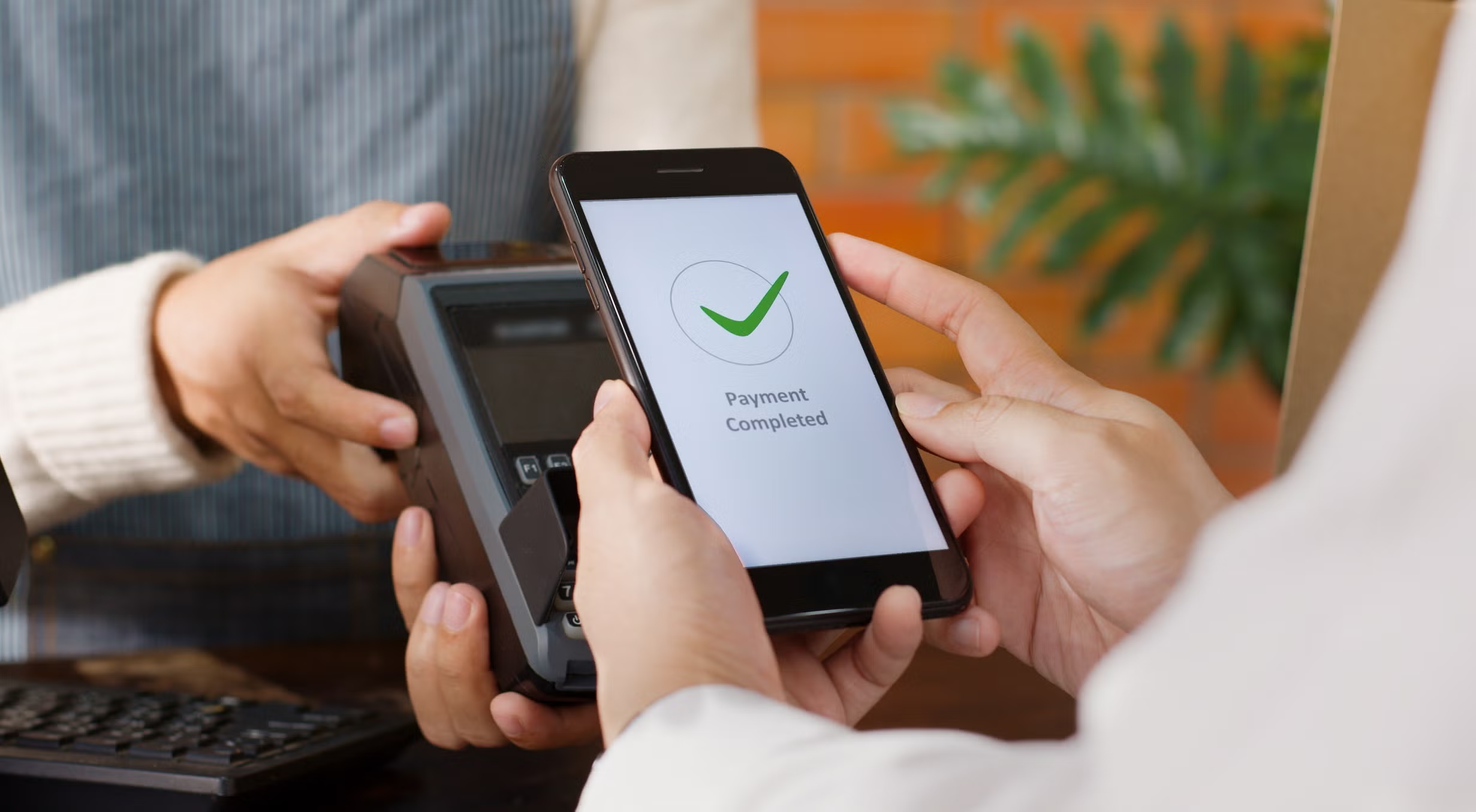
The Rise of Digital Payments in Turkey: A Complete Guide to E-Wallets, Online Banking, QR Payments, and the Cashless Future
Turkey has become one of the fastest-evolving digital payment markets in Europe and the Middle East. Over the last decade, Turkey’s financial ecosystem has transformed dramatically, shifting from traditional banking toward mobile banking, contactless payments, digital wallets, QR codes, and instant transfers. Today, Turkey is considered a leader in fintech adoption, with millions of people using mobile phones to manage money, shop online, transfer funds, and pay bills.
This detailed guide explains how digital payments work in Turkey, the most popular platforms, their benefits, security features, challenges, and the future of cashless transactions.
The Digital Transformation of Turkey’s Banking System
Turkey’s banking sector is one of the most technologically advanced in its region. Banks such as Ziraat Bankası, İş Bankası, Garanti BBVA, Akbank, QNB Finansbank, and Yapı Kredi have invested heavily in digital infrastructure.
The result?
Millions of users can perform financial tasks without visiting a branch.
Key drivers behind digital payment growth in Turkey:
-
High smartphone penetration
-
Fast and affordable mobile internet
-
Government support for digitalization
-
Strong fintech innovation
-
The rise of e-commerce
-
Younger population adopting mobile tools quickly
Today, more than 70% of all financial transactions in Turkey are conducted digitally.
Popular Digital Payment Methods in Turkey
Turkey’s digital payment landscape is diverse, offering multiple ways to transfer money and make payments instantly.
Mobile Banking Apps
Almost every bank in Turkey provides advanced mobile applications allowing users to:
-
Transfer money (EFT, FAST, Havale)
-
Pay bills
-
Manage credit cards
-
Buy foreign currency
-
Purchase gold
-
Check account balance
-
Schedule payments
-
Open savings accounts
-
Apply for loans
These apps are the foundation of Turkey’s cashless ecosystem.
FAST System (Instant Money Transfer)
Launched by the Central Bank of Turkey, FAST (Fonların Anlık ve Sürekli Transferi) allows users to transfer money between banks in seconds — 24/7.
This is one of the most revolutionary payment systems in the country.
FAST also supports QR code payments, making it easier to pay:
-
Restaurants
-
Taxi drivers
-
Market vendors
-
Online stores
-
Utility bills
QR Code Payments (QR ile Ödeme)
QR payments have become extremely common.
Users can scan a code using their bank app or digital wallet to pay instantly.
Benefits include:
-
No need for cash
-
No need for debit/credit cards
-
Fast and secure
-
Accepted widely in cafés, shops, and markets
Even small street vendors now use QR codes for payments.
Digital Wallets (E-Cüzdan)
Turkey has several popular e-wallets:
-
Papara
-
Paycell
-
Tosla
-
FAST-supported wallets
-
İşCep Wallet
-
GarantiPay
These apps allow users to:
-
Send/receive money
-
Make online payments
-
Pay bills
-
Buy games, digital products, subscriptions
-
Use virtual or physical prepaid cards
Papara, in particular, has millions of users due to its simplicity and low fees.
Contactless Debit and Credit Cards
Contactless technology (Temassız Ödeme) is widely adopted.
Users can tap their card on a POS machine and pay in seconds — no PIN required for small purchases.
Banks in Turkey also offer:
-
Virtual cards for online shopping
-
Temporary cards for security
-
Cashback and reward programs
Online Shopping & E-Commerce Payments
Turkey has a booming e-commerce market with major platforms such as:
-
Trendyol
-
Hepsiburada
-
Amazon TR
-
ÇiçekSepeti
Most shoppers use:
-
Credit cards
-
Debit cards
-
Papara / digital wallets
-
Bank transfers
-
Pay-on-delivery (still common but decreasing)
Strong buyer protection policies encourage online spending.
Benefits of Digital Payments in Turkey
Digital payment adoption has brought several advantages for consumers, businesses, and the economy.
Convenience & Speed
Paying bills, booking travel, sending money to friends, and shopping online can be done within seconds — no queues, no paperwork.
24/7 Money Transfers
FAST allows instant transfers any time, even on weekends and holidays.
Reduced Cash Dependency
People no longer need to carry large amounts of cash.
This reduces:
-
Theft risks
-
Lost money
-
Counterfeit currency issues
Transparency & Record Keeping
All digital transactions are recorded, making it easier to:
-
Track spending
-
Manage budgets
-
File taxes
-
Resolve payment disputes
Growth in Online Businesses
Digital payments support:
-
E-commerce websites
-
Freelancers
-
Service providers
-
Subscription businesses
-
Digital marketing agencies
Small businesses can now accept payments without expensive infrastructure.
Financial Inclusion
People without a traditional bank account can still use:
-
Digital wallets
-
Prepaid cards
-
QR payments
This makes financial services accessible to more citizens.
Security Measures in Digital Payments
Turkey’s digital payment ecosystem is highly secure thanks to strong regulations and modern technology.
Banks and fintech platforms use:
● Two-Factor Authentication (2FA)
SMS codes, app verification, or biometric checks.
● End-to-End Encryption
Protects all communication between user and server.
● Tokenization
Card details are replaced with digital tokens for online transactions.
● Fraud Monitoring Systems
AI-based tools detect suspicious behavior instantly.
● Virtual Cards
Users can create temporary cards for safer online shopping.
● Spending Limits
Daily and monthly limits prevent large unauthorized withdrawals.
Despite advanced security, users should still:
-
Avoid public WiFi for banking
-
Use strong passwords
-
Enable biometric login
-
Regularly check account statements
Challenges Facing Digital Payments in Turkey
Although digitalization is growing rapidly, a few challenges remain:
Elderly Population Hesitation
Older generations still prefer cash and face difficulties adapting to:
-
Mobile apps
-
QR payments
-
Online shopping
More digital education is needed.
Cybersecurity Awareness
Some users fall for scams such as:
-
Fake bank messages
-
Phishing emails
-
Fraudulent investment ads
Banks constantly warn customers, but awareness must improve.
Reliability of Internet Infrastructure
Most major cities have strong internet, but rural areas still face technical limitations.
Business Adaptation
Not all small shops accept digital payments, although this is improving rapidly.
The Future of Digital Payments in Turkey
The future of Turkey’s financial system is undeniably digital.
Here’s what experts expect:
Full Integration of QR Code Payments
QR will become the dominant method in:
-
Restaurants
-
Taxis
-
Grocery stores
-
E-commerce
-
Government services
Expansion of Digital Wallets
E-wallets will likely replace traditional debit cards for many users.
Cryptocurrencies & Digital Lira
Turkey is developing a Central Bank Digital Currency (CBDC) — the Digital Turkish Lira.
This will modernize payments further and enable faster transactions.
Growth of Fintech Startups
More Turkish fintech companies are expected to emerge, offering:
-
AI budgeting tools
-
Instant lending
-
Micro-investments
-
Subscription management
Cashless Public Transportation
Cities like Istanbul may eventually move toward fully digital fare systems.
Increased Use of Biometrics
Payments through:
-
Fingerprint
-
Face ID
-
Voice recognition
will become mainstream.
International Digital Payment Integration
More partnerships with global systems like:
-
Apple Pay
-
Google Pay
-
PayPal (if reapproved)
may become available.
How Digital Payments Influence Daily Life in Turkey
Digital payments have transformed everyday routines:
-
People pay rent via bank apps
-
Utility bills are paid automatically
-
Students pay tuition online
-
Shoppers scan QR codes instead of using ATMs
-
Families send money to each other instantly
-
Freelancers receive international payments easily
Life has become faster, more organized, and more secure.
Final Thoughts Turkey’s Journey Toward a Cashless Society
Turkey is rapidly becoming one of the most innovative digital payment markets in the world. With advanced banking apps, QR code systems, e-wallets like Papara, and instant transfer solutions like FAST, the country has embraced financial technology at an impressive pace. Despite challenges such as cybersecurity risks and generational adaptation, the future of digital payments in Turkey is bright, efficient, and full of potential.
For residents, businesses, and foreigners living in Turkey, understanding digital payment systems is no longer optional it is essential.
The way Turkey manages money today will shape its economic future tomorrow.